Table of contents
Your people are using AI, some of them a lot.
Some teams are using it together.
Almost no organization is using AI the right way at the organizational level.
Using AI the right way means reducing the costs of everyone being individually AI-first- including the explosion of content. It also means realizing the potential that AI presents to understand and guide towards organizational outcomes- the potential to truly act aligned.
Whether you build it or buy it, an alignment agent is how you fix this.
Executive Summary
Organizations need an alignment agent. AI is swamping the organization, the gains are stopping at the individual or team level, and the organizations that win are the aligned ones.
The data is clear that AI usage has grown exponentially. In this year's Wharton School and GBK Collective survey, 45% of large U.S. firms will spend $10 million or more on AI this year, up from 39% last year. [1]
This spending is surpassing the organizational benefits. McKinsey found that 88% of organizations used AI in 2025, and 6% were high performers with it; in McKinsey's 2026 survey, high performers are still 6%, "unchanged from 2025." [2] Per Ethan Mollick: "AI use that boosts individual performance does not always translate to boosting organizational performance." [3]
Why? Two reasons.
The first is about realized costs. Individual AI usage leads to swamping, where colleagues spend the day creating and consuming instead of deciding, and re-asking, where the same question gets asked 20 times in 20 personal AI accounts and nobody compares the 20 answers.
The second is about unrealized benefits. AI presents an opportunity to make the organization more aligned and therefore deliver on outcomes, but few organizations have recognized that benefit yet. You're probably already persuaded that aligned organizations win; Patrick Lencioni has spent a career arguing it. [4]
The solution to deal with swamping and re-asking costs and capture alignment must account for how work happens, from the individual to the team to the organization, in the AI age. Most of us understand how to get the most from individual AI. Team AI adds complexity, but it's doable. Organizational AI gets combinatorially harder, because every team has to stay aligned with every other team. Engineers all know the Mythical Man-Month story; sometimes more help makes things slower, worse or both. [5]
Alignment agents are the answer to this challenge. Alignment agents are software that holds the organization's logic, overall and for each part, of "what are we really trying to do" and "are we actually doing it," and keeps checking.
This white paper ends with what an alignment agent has to do, the questions it should answer, whether you can build one yourself, and a four-week test to tell whether you need one.
01 The challenge: more AI means more swamping, more re-asking
Everyone does their own AI work and receives everyone else's. People with AI make more: more memos, more messages, more tickets, more code. Even with built-in review tools, AI generates more decision points, which have to land on someone’s desk. So colleagues spend their day consuming instead of deciding.
This is one of two costs, the swamping problem.
We know that use is up. Gallup found the share of U.S. employees using AI in their role at least a few times a year nearly doubled, from 21% in 2023 to 40% in mid-2025. [6] Spend is up too: per the Wharton–GBK study mentioned above, 45% of large U.S. firms are spending $10 million or more this year, up from 39% last year. [1]
We also know the gain is missing.
McKinsey said in August 2026 that this AI spending hasn't moved the earnings needle for 94% of enterprises. [7] The Federal Reserve Bank of St. Louis read about 490,000 earnings-call transcripts: about 95% of the sentences about AI and productivity refer to future gains (Ozkan, Kalyani and Sullivan, July 2026). [8]
The second cost is re-asking.
Consider:
- 40% of employees surveyed in August 2025 believe they've received "workslop". I'd wager that number has doubled since. [9]
- A University of California, Berkeley field study in Harvard Business Review, February 2026, by Ranganathan and Ye, carries its finding in its title: "AI Doesn't Reduce Work—It Intensifies It." [10]
The search burden was there before AI. Atlassian estimates 2.4 billion hours a year are wasted searching for information within the Fortune 500 (The State of Teams 2025). [11] Gartner found 47% of digital workers struggled to find the information they needed… in 2023. [12]
AI has just exacerbated this trend. If you are old enough to have switched from a typewriter to a word processor, you know that as the cost per word per writer goes down, the words per user go up. And so on the margin you write less carefully when the cost of a mistake is lower. I'm sure that was true moving from scribes to the printing press too. Not a knock on technological progress, just a cost we have to acknowledge and account for.
Generative AI is firmly in that tradition, just exacerbated. If you can ask for an essay in a few clicks… well, you get to today’s state, where we’re shipping each other essays when a well-curated paragraph (or sentence!) would have better made the point.
As a result of all of this, the pile grows. Yes, AI helps on the receiving end too: it summarizes, it triages, it drafts the reply. But the big decisions still need a human, and there's one of me and many of you. So the ability to process goes up a little, what I receive goes up a lot, and the gap between the two is the pile. Exhibit 01 shows all 3 lines.
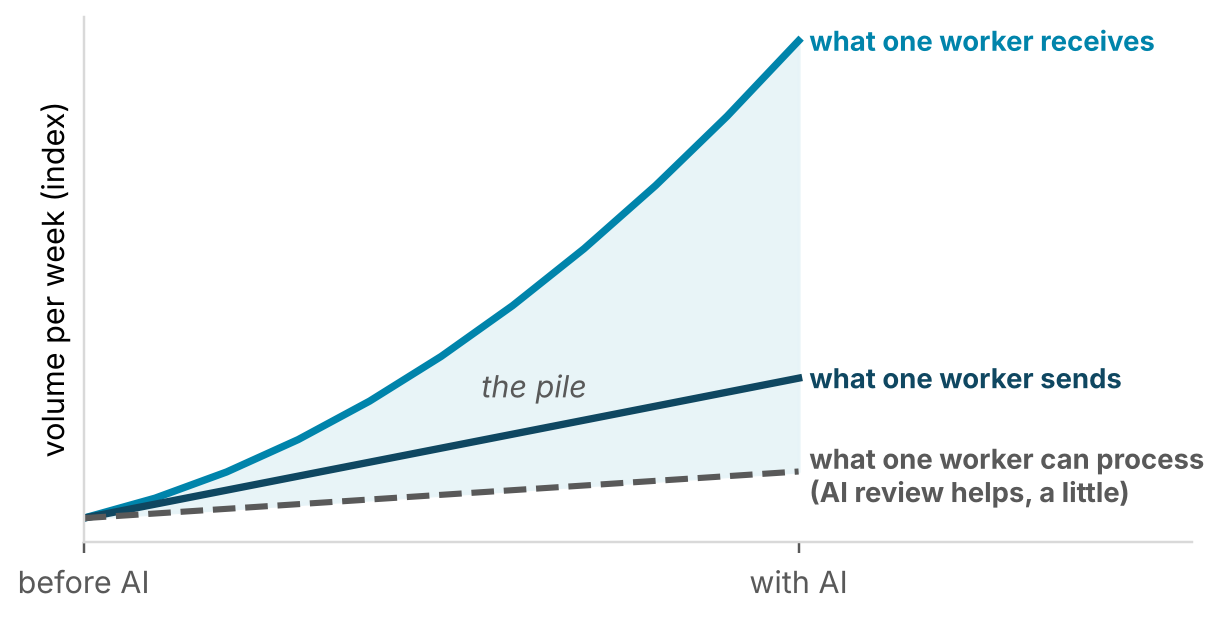
EXHIBIT 1 · The pile: what one worker sends, receives and can process
Source: Sema; sketch built on Microsoft Work Trend Index 2025 [13] and the workslop study [9]; illustrative, not a client's data.
The second cost is re-asking.
How many people ask the same question in their own personal AI setup? How many people chime in on the same thread?
When it’s even easier to ask for help, and easier to weigh in, then everything stretches out.
This is expensive in terms of lost time, expensive in terms of token budgets, and expensive in terms of organizational speed.
We're starting to see measurement of this cost. Glean's Work AI Index 2026 puts the time a worker spends "botsitting" AI, feeding it context and checking what comes back, at 6.4 hours a week. [14] I expect that almost all of that context is the same context a colleague fed another AI instance an hour, a day, a week earlier: the same customer list, the same roadmap, the same definition of "on track." The company pays for it every time.
02 The opportunity: AI can drive alignment, and aligned organizations win
I believe aligned organizations win. You probably believe that too.
The strongest practitioner evidence comes from Lencioni, who is masterful on the importance of alignment. [4]
The strongest academic evidence comes from the late, great organizational psychologist J. Richard Hackman. His research found 6 conditions that make a team effective: a real team, a compelling purpose, the right people, clear norms of conduct, a supportive organizational context, and well-timed team coaching ("Collaborative Intelligence," Berrett-Koehler, 2011) [15]. That’s alignment.
True alignment is easy to read about, and extremely hard to achieve.
Most organizations aren't there. Donald Sull's research across 124 organizations found only 28% of executives and middle managers could list 3 of their firm's strategic priorities. [16] London Business School put it as two-thirds who can't. [17]
Or as Ethan Mollick put it: “Multiplayer AI needs to move past the group chat phase. Chats are chaotic, everyone sees everything (creating social & management issues), and they're bad for long projects. Worse, they keep AI trapped inside existing teams, when its real promise is working & helping across them.” [emphasis added] [18]
The opportunity is for the organization to become as powerful as the individual already can be.
03 The buildup: individual, team, organization
To understand how we can go from broad individual use to little organizational gain from AI, let’s spend a minute talking about the “staircase” from individual to team to organization.
Individual. This is the rung of the ladder we understand the best, even if many of us haven’t achieved our own performance goals. You’re probably beating yourself up that you could be using AI better- while still likely being 2-10x personally more productive than you were 12 months ago.
For me and our team, great AI usage looks like using AI to support any individual work that could take more than 5 minutes to do by hand, and adding AI as a thought partner for all medium- to high-importance decisions.
Team. AI usage at the team level gets harder. Put aside the format (skills, prompts, etc.) and focus on what is produced: Are we sharing information? Are we sharing methods? Are we sharing answers?
Many organizations have encouraged/mandated the first rung and hope the second appears. A mandate gets you the habit. It doesn't get you the library, the rubric, or the question.
[As an aside, an exploration for another time is that, potentially, software engineering is the function that’s furthest ahead on team-level AI use, given the use of shared tools and processes leading to the funnel of shipped code, even if individual developers may still be moving up the curve of usage].
When AI is set up to help the team, there's initial evidence of significant impact. Procter & Gamble ran a field trial with Harvard and Wharton researchers, published as "The Cybernetic Teammate" in 2025. [19] 776 P&G professionals worked real product problems. One person with AI matched a 2-person team without it. Teams with AI were about 3 times as likely to produce a top-10% solution, and the expertise crossed the silo: R&D people produced commercial ideas and commercial people produced technical ones.
Organization. Read the adoption numbers by altitude and the staircase shows itself. Workers: 53% use AI at work, while only 1% of organizations call their rollout mature [6, 20].
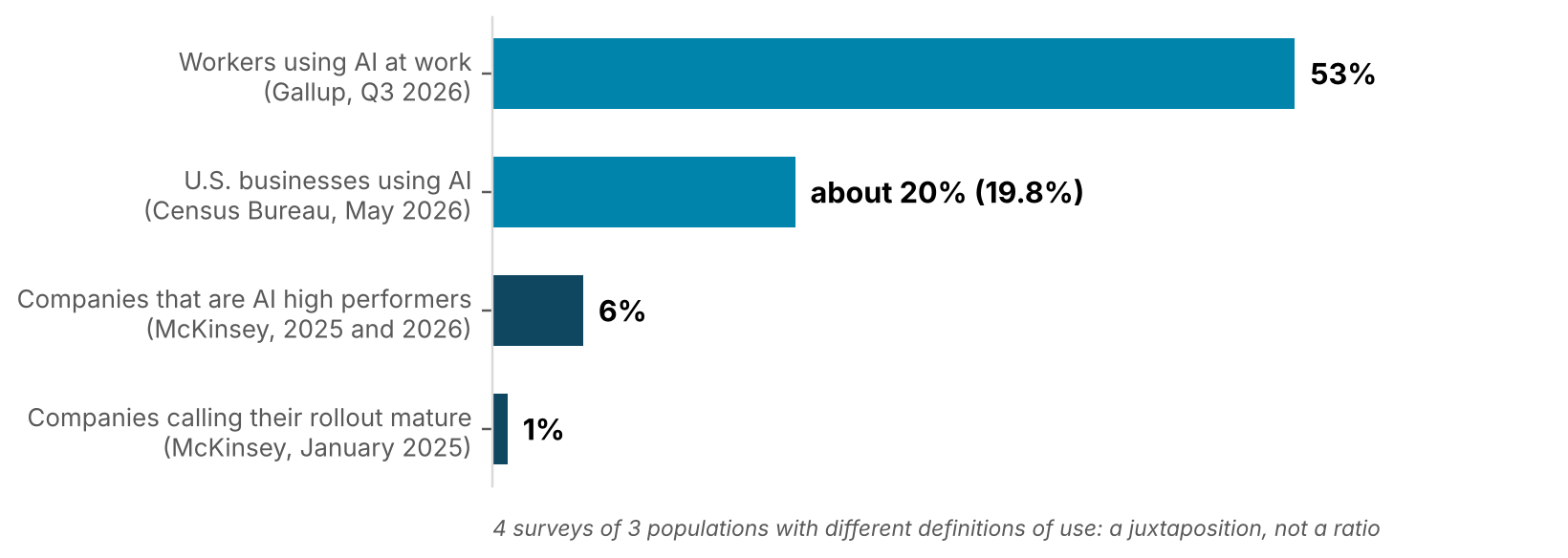
EXHIBIT 2 · Individual vs. Organizational Adoption
Source: Gallup, AI in the workplace indicator (third quarter of 2026) [6]; U.S. Census Bureau, Business Trends and Outlook Survey (May 2026) [21]; McKinsey, Superagency in the Workplace (January 2025) [20] and The State of AI in 2025 (November 2025) [2].
And even that 1% is almost certainly optimistic. Why? Because AI at the organizational level doesn’t just need sufficient individual level adoption, or team level adoption to be “mature”. It needs to do more. That’s the next section.
04 Why the organization level is hard: 6 mechanisms
You know that staying aligned gets harder as organizations grow. Five teams have 10 connections to keep aligned, and 20 teams have 190. That's Fred Brooks's group intercommunication formula, n(n − 1)/2, from "The Mythical Man-Month" (Addison-Wesley, 1975). [5]
Underlying that basic math, five other mechanisms make organizational alignment harder as you scale.
Aggregation gap. Individual hours don't sum into firm output. Workers in Glean's 2025 survey say AI saves them 11 hours a week (vendor, self-reported). [22] The International Labour Organization calls this the aggregation paradox: micro-level productivity gains that never show up in the firm-level number. [23] An hour saved is an hour, not a decision, until something routes it to a question the organization needs answered.
Context loss. The answer never sees the other systems. A 200-person company runs on seven core systems: the customer relationship management (CRM) system, tickets, code, finance, the strategy document, customer feedback, the Board deck. Every AI session starts from one of them, so the answer about bookings never sees the ticket that explains the slip. Every hand-off between departments rebuilds the context from scratch.
Join decay. The data and the links between systems go stale. Landbase, a vendor, estimates a CRM loses about 70% of its accuracy in a year. [24] And if the data goes stale without intentional maintenance, the linking between data sets goes stale too.
Data readiness. Gartner predicts 60% of AI projects without AI-ready data will fail. [25] Organizational questions run on data people fill in by hand: the CRM, the ticket, the roadmap. Individuals know how to make sense of the messy data in the domain but it takes effort for a system to get it.
Incentives and the learning gap. At the individual level the incentive is personal: my curiosity, my work, my skill development. At the organization level somebody has to own the number and have the hard conversations to make sure teams are talking about the same number. That's hard work that's easy to let fall by the wayside.
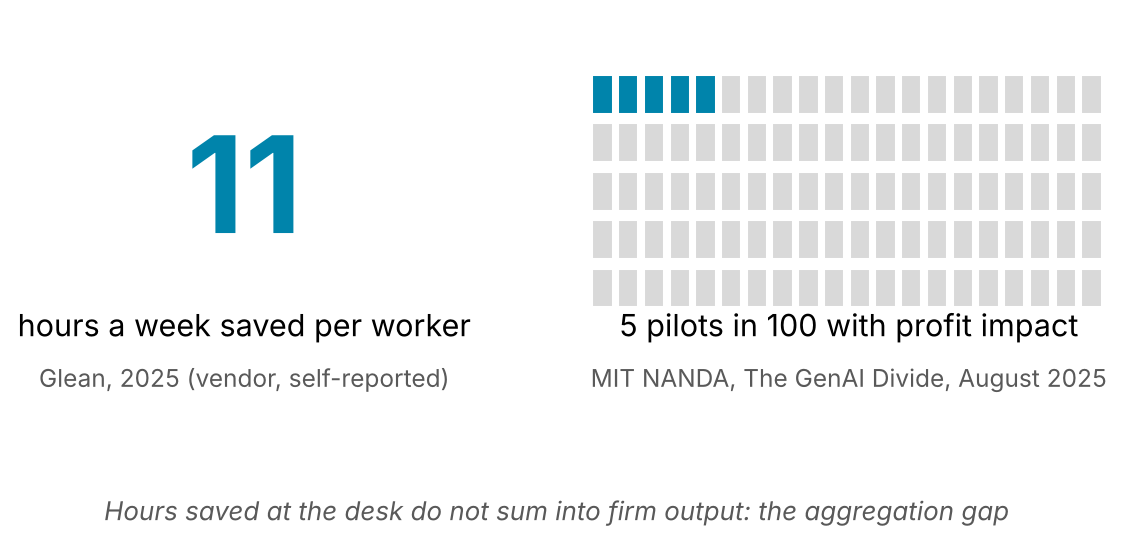
EXHIBIT 3 · The aggregation gap: 11 hours a week saved per worker, 5 pilots in 100 with profit impact
Source: Glean press release, 2025 (vendor, self-reported) [22]; MIT NANDA, The GenAI Divide, August 2025 [26].
If you add all of the complexity of AI to organizations that weren’t aligned beforehand - 28% of managers could name 3 priorities before anyone bought a model [16] – AI just compounds the issue.
05 The alignment agent in practice
5.1 What an alignment agent has to do
We believe that an alignment agent is the answer to the swamping and re-asking costs, the unrecognized benefits of better alignment, and the particular complexity of organization-level alignment.
What does an alignment agent do?
An alignment agent works across C-Suite departments, holds an opinion about what's going on, makes recommendations, and, over time in keeping with training/risks/stakes, acts on them.
The job breaks into 8 parts.
- Hold a standing question that crosses departments. "Will we hit the number, and if not, why?" needs Sales, Finance and Product in one answer. A question one team can answer alone is a team question, and the team should keep it.
- Keep the join alive. The CRM record, the ticket, the code change and the invoice for the same customer, tied together before anyone asks, and kept tied as the systems underneath change. Section 04 is what happens when nobody does this.
- Ask on a schedule. Same schedule, the same way. A question with no schedule is a chat.
- Use one method. The same calculation every week, so a changed number is a changed business, not a changed preparer.
- Remember. Last week's answer next to this week's, so conclusions carry over instead of being re-derived.
- Have an opinion. Not "here is the data" but "we will miss by 8%, it's the mid-market segment, and here's the ticket that explains it."
- Tell people before they ask. It tells FP&A the forecast moved before they had time to discover (because there were so many Slack messages to get through…). Now, the first level of discovery is done and FP&A can go deeper, faster and spend time on the hard things, the real things.
- Act, with approval. Alignment agents start with insight and then graduate to action, at pace that matches the accuracy level and the stakes of being wrong.
5.2 An example from Sema's alignment agent, Liz
Sema's alignment agent is called Liz. Here's the one weekly question I'd start any leadership team on. It’s Bookings Radar: are we going to hit the number, and if not, why? Its 5 sources are finance, the pipeline in the CRM, strategy documents, customer feedback, and engineering tickets. Answered separately they give 5 answers nobody compares. An alignment agent gives one answer, and it remembers last week's.
EXHIBIT 4 · FRAMEWORK
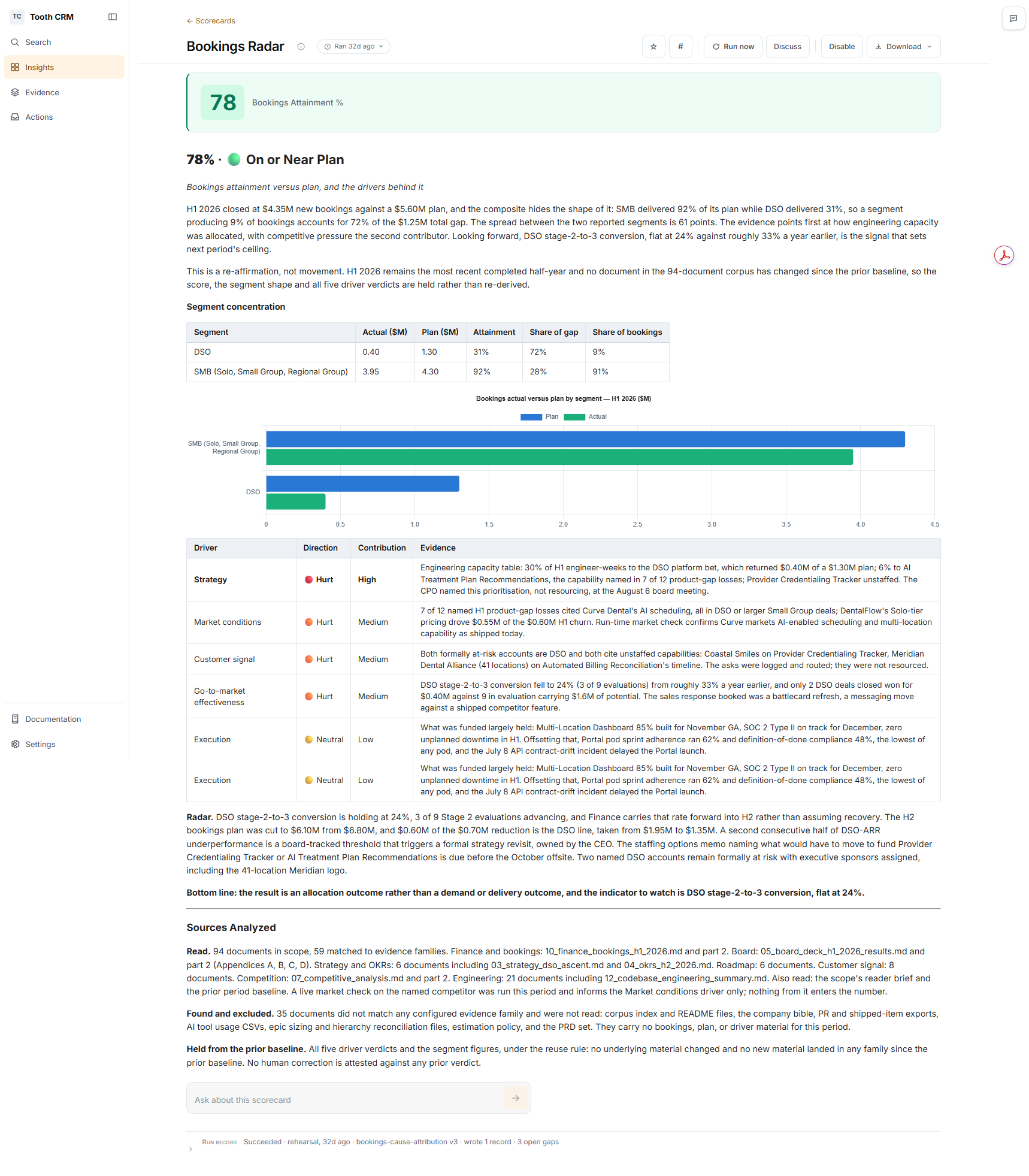
Sample Bookings Radar on illustrative data.
This view shows all 8 jobs in that one view. The question crosses 4 departments (job 1). The deal, the ticket and the invoice are already joined (job 2). It ran Monday, the way it ran last Monday (jobs 3 and 4). Last week's forecast sits beside this week's (job 5). It names the miss, the segment and the cause (job 6), and the head of Sales saw it before the Monday meeting (job 7). Nobody opened 5 systems to build it, which is the hours it gives back. Job 8 is the recommendation: a score of 78 is worth looking into.
By connecting the data sets, the alignment agent can tell you four outputs no single feed can produce:
- Variance by named deal and by cause, not a forecast that just moved.
- Roadmap slip in days against what Sales committed in the CRM, not against what Engineering planned.
- A mapping from the written strategy to what shipped and what closed.
- A catalog of go-to-market hypotheses, each with its evidence for and against.
None of these needs new data. They need the same data joined, and kept joined.
5.3 Questions your alignment agent should answer
“Are we going to hit our number and what can we do about it?” is an important one.
Here’s the rest of our recommended short list.
- "Will the roadmap ship when we said?" Which items slipped, by how many days, and what closes the gap.
- "What does the Board need to know this month?" The 7 questions your Board asks every month, answered the same way every month.
- "What is our strategy, as written? Are we veering from it?" As the documents state it, against what shipped and closed this quarter.
- "Which go-to-market bets did this quarter prove or kill?" Which bets the deals supported, contradicted, or left untested.
5.4 Can you build an alignment agent with the frontier lab model of your choice?
Of course you can. You’ve read this far; you know that everything code-based can be built from scratch, faster than ever before.
As with any build vs. buy decision, the question is opportunity cost for
- Data engineering to pull systems of record into one place and keep the feeds running
- Domain experts to build their respective systems’ inputs
- Formal or informal data scientists to build, test and maintain the scoring system
06 Conclusion: how to know if you need an alignment agent, and whether it's working
If you have more than 25 colleagues, I am persuaded on your behalf that an alignment agent will help your organization win. But you are in charge of you. Here’s a test you can run over four weeks.
Pick an important cross-functional question- maybe from the above list, maybe you have a more important one.
- Do you know the answer today?
- How much work went into getting it?
- How accurate is it?
- How much consistency is there in the data and results?
- How many people went looking for the answer and found it? How many rebuilt it?
- How do people act on it?
- How do the answers to 1-6 change over the four weeks?
If the answer took more than a day to assemble, changed depending on who assembled it, or nobody acted on it, you have your answer. That is what an alignment agent removes.
***
Everyone in your organization got more powerful this year. Your organization probably didn’t.
The gains are stopping at the individual or team level, and the swamping and re-asking costs land on everyone else.
An alignment agent is how you fix that, whether you build it or buy it. Four weeks by hand tells you whether you need one.
References
- The Wharton School and GBK Collective, 2026 AI Adoption Report — https://knowledge.wharton.upenn.edu/special-report/2026-ai-adoption-report/ ; as reported by Laura Bratton, The Information, October 13, 2026 — https://www.theinformation.com/newsletters/applied-ai/companies-prove-ai-spending-pays
- McKinsey & Company, "The state of AI in 2025: Agents, innovation, and transformation," November 5, 2025 (88% report regular AI use in at least one business function; AI high performers about 6% of respondents) — https://www.mckinsey.com/capabilities/quantumblack/our-insights/the-state-of-ai-2025 ; "The state of AI in 2026: On the road to ROI," August 25, 2026 (high performers 6%, "unchanged from 2025") — https://www.mckinsey.com/capabilities/quantumblack/our-insights/the-state-of-ai
- Ethan Mollick, "AI in organizations: Some tactics," One Useful Thing, October 2024 — https://www.oneusefulthing.org/p/ai-in-organizations-some-tactics
- Patrick Lencioni, "The Advantage: Why Organizational Health Trumps Everything Else in Business," Jossey-Bass/Wiley, 2012 — https://newsroom.wiley.com/press-releases/press-release-details/2012/The-Advantage-Why-Organizational-Health-Trumps-Everything-Else-In-Business/default.aspx ; the 6 questions — https://www.speakers.ca/2013/03/six-critical-questions-with-patrick-lencioni/
- Frederick P. Brooks Jr., "The Mythical Man-Month: Essays on Software Engineering," Addison-Wesley, 1975 (group intercommunication formula n(n − 1)/2; 50 people give 1,225 channels) — https://en.wikipedia.org/wiki/The_Mythical_Man-Month
- Gallup, "AI Use at Work Has Nearly Doubled in Two Years," June 15, 2025 (21% to 40%) — https://www.gallup.com/workplace/691643/ai-use-work-nearly-doubled-two-years.aspx ; Gallup, Indicator: AI in the workplace, updated through the third quarter of 2026 (53% at least a few times a year; 16% daily) — https://www.gallup.com/699797/indicator-artificial-intelligence.aspx
- McKinsey & Company, August 2026, as reported by TechTimes, "Record AI spending can't move earnings needle for 94% of enterprises" — https://www.techtimes.com/articles/325590/20260826/record-ai-spending-cant-move-earnings-needle-94-enterprises-mckinsey-finds.htm
- Ozkan, Kalyani and Sullivan, "AI and Productivity: What Firms Are Saying on Earnings Calls," Federal Reserve Bank of St. Louis, On the Economy blog, July 31, 2026 — https://www.stlouisfed.org/on-the-economy/2026/jul/ai-productivity-what-firms-say-earnings-calls ; as reported by Fortune, July 31, 2026 — https://fortune.com/2026/07/31/ai-productivity-doesnt-show-up-in-data-earnings-calls-st-louis-fed
- Niederhoffer, Kellerman, Lee, Liebscher, Rapuano and Hancock, "AI-Generated 'Workslop' Is Destroying Productivity," Harvard Business Review, September 22, 2025 (body paywalled) — https://hbr.org/2025/09/ai-generated-workslop-is-destroying-productivity ; BetterUp Labs (vendor), "The hidden costs of workslop," September 29, 2025 (40% in the last month; 1,004 U.S. desk workers; $186 per month per employee) — https://www.betterup.com/blog/hidden-costs-workslop ; Axios, September 24, 2025 (1 hour 56 minutes per instance) — https://www.axios.com/2025/09/24/ai-workslop-workplace-efficiency-study
- Ranganathan and Ye, "AI Doesn't Reduce Work—It Intensifies It," Harvard Business Review, February 9, 2026 — https://hbr.org/2026/02/ai-doesnt-reduce-work-it-intensifies-it ; as reported by Fortune, February 10, 2026 — https://fortune.com/2026/02/10/ai-future-of-work-white-collar-employees-technology-productivity-burnout-research-uc-berkeley
- Atlassian (vendor), "The State of Teams 2025" report (survey of 12,000 knowledge workers and 200 Fortune 1000 executives; 2.4 billion hours a year within the Fortune 500) — https://atlassianblog.wpengine.com/wp-content/uploads/2025/03/the-state-of-teams-2025.pdf ; summary page https://www.atlassian.com/blog/state-of-teams-2025
- Gartner, press release, May 10, 2023, "Gartner Survey Reveals 47% of Digital Workers Struggle to Find the Information Needed to Effectively Perform Their Jobs" — https://www.gartner.com/en/newsroom/press-releases/2023-05-10-gartner-survey-reveals-47-percent-of-digital-workers-struggle-to-find-the-information-needed-to-effectively-perform-their-jobs
- Microsoft, Work Trend Index special report, "Breaking Down the Infinite Workday," June 17, 2025 (vendor; Microsoft 365 telemetry) — https://www.microsoft.com/en-us/worklab/work-trend-index/breaking-down-infinite-workday
- Glean (vendor), Work AI Index 2026 (6.4 hours a week spent "botsitting" AI: supplying context and checking output), as reported by Enterprise DNA and The Letter Two, September 2026 — https://www.glean.com/work-ai-institute/reports/work-ai-index ; https://enterprisedna.co/resources/news/glean-work-ai-index-2026-botsitting-productivity-paradox/
- J. Richard Hackman, "Do teams need leaders?", Yale Insights, Yale School of Management, March 1, 2011 (the six conditions; "whether I'm talking about a small team, a division of an organization, a whole organization") — https://insights.som.yale.edu/insights/do-teams-need-leaders ; "Collaborative Intelligence: Using Teams to Solve Hard Problems," Berrett-Koehler, 2011 (the six enabling conditions, Part II) ; "Leading Teams: Setting the Stage for Great Performances," Harvard Business School Press, 2002 (five conditions; publisher description) — https://scholar.harvard.edu/rhackman/publications/leading-teams-setting-stage-great-performances
- Sull, Sull and Yoder, "No One Knows Your Strategy — Not Even Your Top Leaders," MIT Sloan Management Review, c. 2018 (analysis of 124 organizations; drawing on Sull, Turconi, Sull and Yoder, "Turning Strategy Into Results," September 28, 2017) — https://sloanreview.mit.edu/article/no-one-knows-your-strategy-not-even-your-top-leaders/
- London Business School, "Two-thirds of senior managers can't name their firm's top priorities" — https://www.london.edu/news-and-events/news/two-thirds-of-senior-managers-cant-name-their-firms-top-priorities
- Ethan Mollick, post on LinkedIn, October 19, 2026 ("Multiplayer AI needs to move past the group chat phase...")
- Dell'Acqua, Ayoubi, Lifshitz, Sadun, Mollick, Mollick et al., "The Cybernetic Teammate: A Field Experiment on Generative AI Reshaping Teamwork and Expertise," NBER Working Paper 33641, March 2025 (cited for direction) — https://www.nber.org/papers/w33641; https://papers.ssrn.com/abstract=5188231
- McKinsey & Company, "Superagency in the workplace: Empowering people to unlock AI's full potential at work," January 28, 2025 (1% of C-suite respondents call their generative-AI rollouts mature; 238 U.S. C-level executives and 3,613 employees) — https://www.mckinsey.com/capabilities/mckinsey-digital/our-insights/superagency-in-the-workplace-empowering-people-to-unlock-ais-full-potential-at-work
- U.S. Census Bureau, Business Trends and Outlook Survey, "Large Firms With at Least 20 Employees Biggest AI Users," May 26, 2026 (17% to 20%; 19.8% as of May 3, 2026; question revised November 2025 to "in any of its business functions") — https://www.census.gov/library/stories/2026/05/ai-use-businesses.html ; question wording — https://www.census.gov/hfp/btos/downloads/AI%20Question%20Wording%20Updates.pdf ; Federal Reserve Bank of Minneapolis, May 29, 2026 (about 10% in late 2025 under the old question) — https://www.minneapolisfed.org/article/2026/ai-adoption-in-business-grows-steadily-but-unevenly
- Glean, press release, 2025: "Workers say AI saves 11 hours a week ... but lack of context is eating the gains" (vendor) — https://www.glean.com/press/workers-say-ai-saves-11-hours-a-week-over-one-quarter-of-the-workweek-but-lack-of-context-is-eating-the-gains-new-report-finds
- International Labour Organization, research brief, "The aggregation paradox of AI," 2025 — https://www.ilo.org/publications/aggregation-paradox-ai-why-do-micro-economic-productivity-gains-ai
- Landbase, "Data decay: B2B CRM loses accuracy" (vendor) — https://www.landbase.com/blog/data-decay-b2b-crm-loses-accuracy
- Gartner, press release, February 26, 2025, "Lack of AI-ready data puts AI projects at risk" — https://www.gartner.com/en/newsroom/press-releases/2025-02-26-lack-of-ai-ready-data-puts-ai-projects-at-risk
- MIT NANDA, The GenAI Divide, August 2025, as reported by Fortune — https://fortune.com/2025/08/18/mit-report-95-percent-generative-ai-pilots-at-companies-failing-cfo ; Computing — https://www.computing.co.uk/news/2025/ai/mit-report-95pc-corporate-generative-ai-pilots-fail
Contact mvi@semasoftware.com to share feedback or learn more.


